Wednesday, July 1, 2015

Cardiac CT as effective as TEE in predicting recurrent strokes

Transesophageal echocardiography (TEE) is the imaging modality of choice in the detection of source of emboli in patients with ischemic stroke.  Cardiac CT is just as effective at predicting recurrent strokes, according to a study published in Radiology.

Lee et al analyzed the studies of 548 consecutive patients, 374 of whom had ischemic stroke (254 men and 120 women, with a mean age of 63.1 years) who underwent TEE and cardiac CT. TEE and cardiac CT images were assessed for cardioembolic sources, including thrombus, tumor, spontaneous echo contrast, valvular vegetation, atrial septal aneurysm, patent foramen ovale, and aortic plaque. The primary end point was stroke recurrence.


Twenty-eight of the patients had stroke recurrence in the two-year period following their initial strokes. The researchers analyzed the information from their scans and found that complex aortic plaque was associated with increased risk of recurrence.  

Cardiac CT was equally as effective as TEE as a predictive tool for recurrent strokes.

Thursday, June 25, 2015

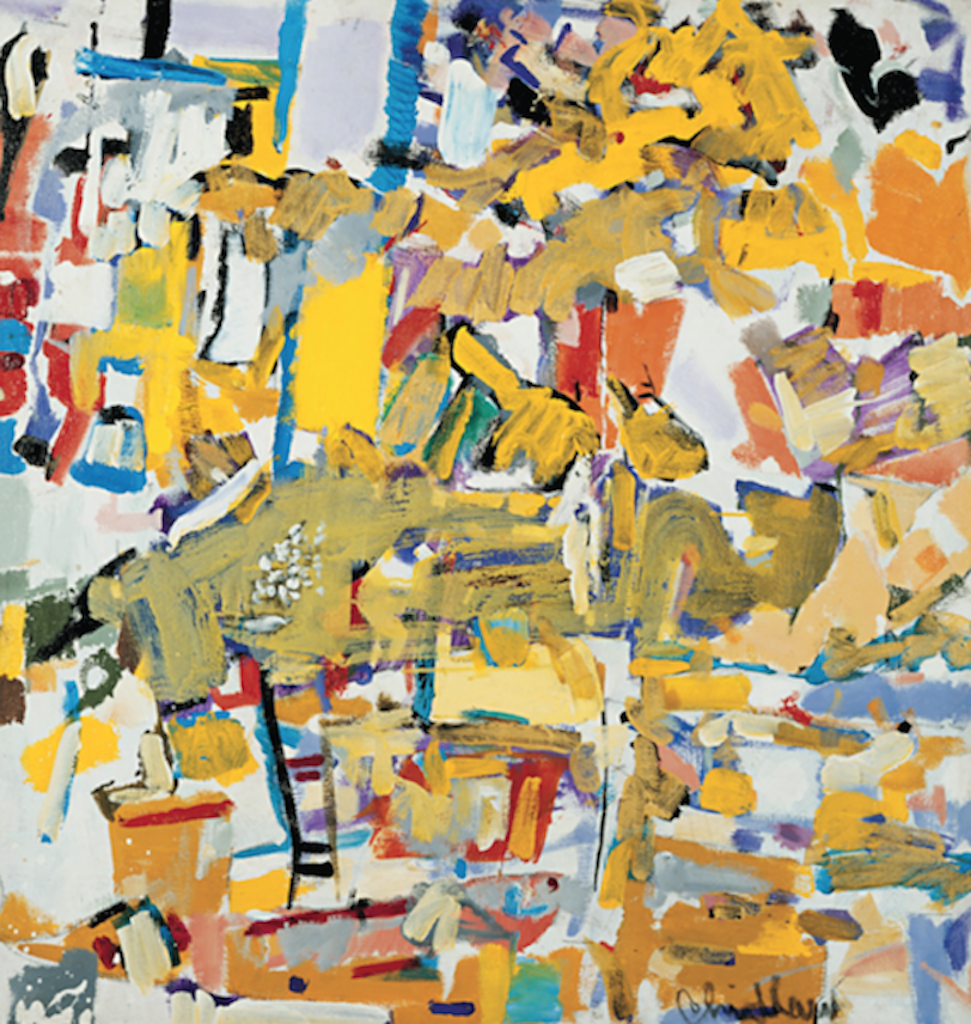
Boogie Woogie


Jeanette Smith describes the painting Boogie Woogie by Paul Chidlaw (1900-1989), a native of Ohio, in Art of JAMA. 

Chidlaw attended the Art Academy of Cincinnati from 1919 to 1923 and in 1927 moved to Paris, which at that time was the epicenter of experimentation in modern art.

He returned to the United States in 1935, and initially painted murals for the Works Progress Administration.  

In Boogie Woogie, a cheerful inundation of colors reminds the exuberance of the genre that became popular in the late 1920 and visually suggests a torrent of bright streamers and confetti drifting down from the winter sky at New Year’s celebrations. Although each and every color is stimulating in itself, the work in aggregate is even more motivating because of the effect of the contrasting hues and shapes.


Although Chidlaw’s eyesight was diminishing in his late years, he retained his creativity and spirit of artistic adventure and created paintings with colors combining as in a joyful symphony.

Monday, June 1, 2015

U.S is Spending $4 billion Annually Resulting from False Positive Mammograms and Unnecessary Treatments

According to a paper published in Health Affairs by Ong and Mendel the U.S. spends $4 billion a year on unnecessary medical costs due to mammograms that generate false alarms, and on treatment of certain breast tumors unlikely to cause problems.
 nt
They found that costs due to false-positive mammograms and breast cancer over diagnoses among women ages 40–59, based on expenditure data from a major US health care insurance plan for 702,154 women in the years 2011–13.

The average expenditures for each false-positive mammogram, invasive breast cancer, and ductal carcinoma in situ in the twelve months following diagnosis were $852, $51,837 and $12,369, respectively. This translates to a national cost of $4 billion each year.

The cumulative cost is as follows: $2.8 billion resulting from false-positive mammograms and another $1.2 billion attributed to treatment of tumors that grow slowly or not at all, and are unlikely to develop into life-threatening disease during a woman’s lifetime.


Screening has the potential to save lives. However, the economic impact of false-positive mammography results and breast cancer over diagnoses must be considered in the debate about the appropriate populations for screening.

Tuesday, May 26, 2015

Water Man

The painting Children’s Story (Water Dreaming by Two Children) by Native Australian artist Johnny Warangkula Tjupurrula (1925-2001) and Thomas Cole comments appeared in Art of JAMA.  Life in the arid Northern Territory is difficult and is sustained on meager amounts of water found in locations well hidden and known only to the indigenous people who have survived for millennia by keeping the locations of water to themselves.  The Water Man depicted in this painting is important for survival as he knows where to find water in remote wells, caves, and soaks. He used mental maps known as songlines to find water in the desert. By repeating the words of a song or the movements of a dance, indigenous Australians could follow routes and find landmarks in the open country. Indigenous Australians believed that songlines have been existed thru eternity, a concept referred to as the dreamtime.

Friday, May 22, 2015

Breast Density should not be the Sole Criterion in Determining High Risk for Breast Cancer

Research by Kerlikowske et al published in the Annals of Internal Medicine suggests that not all women with dense breasts are at high enough risk for breast cancer after a normal mammogram to justify having more diagnostic tests such as ultrasound or MRI.

The researchers used data from Breast Cancer Surveillance Consortium (BCSC) breast imaging facilities.

Studies of 365 426 women aged 40 to 74 years who had 831 455 digital screening mammographic examinations were reviewed.

BI-RADS breast density, BCSC 5-year breast cancer risk, and interval cancer rate (invasive cancer ≤12 months after a normal mammography result) per 1000 mammography examinations. High interval cancer rate was defined as more than 1 case per 1000 examinations.

High interval cancer rates were observed for women with 5-year risk of 1.67% or greater and extremely dense breasts or 5-year risk of 2.50% or greater and heterogeneously dense breasts (24% of all women with dense breasts). The interval rate of advanced-stage disease was highest (>0.4 case per 1000 examinations) among women with 5-year risk of 2.50% or greater and heterogeneously or extremely dense breasts (21% of all women with dense breasts). Five-year risk was low to average (0% to 1.66%) for 51.0% of women with heterogeneously dense breasts and 52.5% with extremely dense breasts, with interval cancer rates of 0.58 to 0.63 and 0.72 to 0.89 case per 1000 examinations, respectively.

In this study half of women had mammograms that showed dense breasts. For most women who had a mammogram, the risk for breast cancer after a normal mammogram was low, even for those who had dense breasts and low 5-year breast cancer risk. Two groups of women had the highest risk for breast cancer after a normal mammogram: those with extremely dense breasts and an intermediate or high 5-year cancer risk, and those who had different patterns of breast density and a high or very high 5-year cancer risk.


Breast density should not be the sole criterion for deciding whether supplemental imaging is justified because not all women with dense breasts have high interval cancer rates. BCSC 5-year risk combined with BI-RADS breast density can identify women at high risk for interval cancer.